You pay it even if you go on holiday for two weeks and use zero gas or electricity. In October 2026, standing charges are still around £120 a year combined for a typical dual-fuel household paying by Direct Debit.
At Ofgem’s October 2026 price cap of £1,723 a year for typical use, standing charges make up almost 7% of your bill before you turn on a single light, fridge, or boiler.
With Cornwall Insight forecasting a 16% rise in January 2027, many households are asking why this fixed daily fee didn’t fall after the 5% VAT cut on electricity.
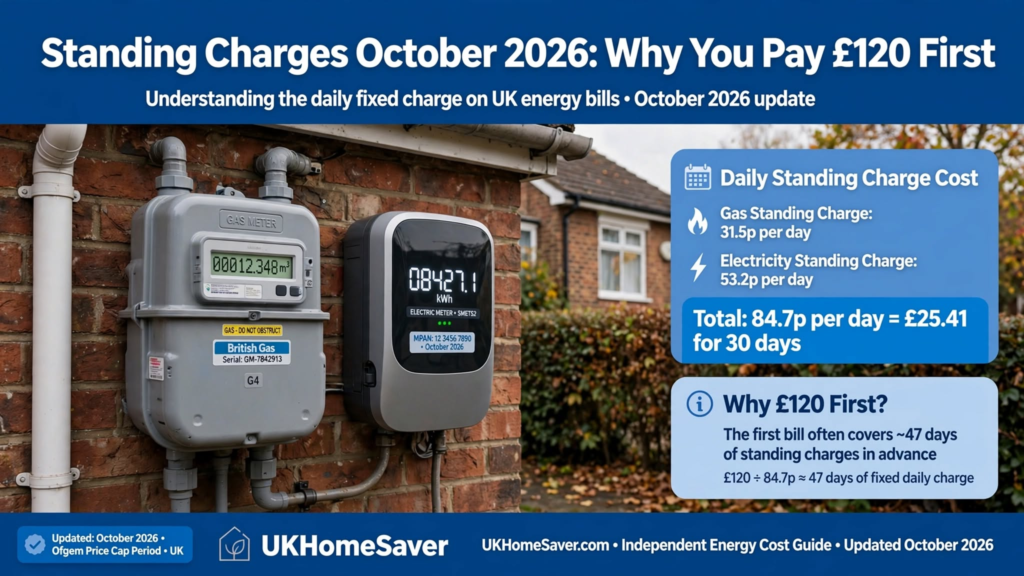
What Are Standing Charges at the October 2026 Cap?
Ofgem’s price cap is made of two parts: unit rate (what you pay per kWh) and standing charge (fixed daily fee).
For October 2026 to December 2026, the average standing charges from Ofgem’s price cap for Direct Debit are:
- Electricity: around 28p to 36p per day depending on region
- Gas: around 12p to 14p per day
- Combined annual total: £120 to £175 a year before you use any energy
This fee covers the costs of keeping you connected: maintaining gas pipes and electricity wires, meter maintenance, supplier operational costs, and government schemes that all suppliers must pay for.
It is charged every day your property is connected, even with zero usage.
Standing Charges by Region October 2026
This is why your neighbour in another region pays a different amount even on the same tariff.
|
Region
|
Electricity SC (per day)
|
Gas SC (per day)
|
Combined Annual Fixed Cost
|
|
London
|
32.1p
|
12.9p
|
~£164 |
|
Southern England
|
34.5p
|
13.1p
|
~£174 |
|
North Wales & Mersey
|
36.8p
|
13.5p
|
~£183 |
|
Northern Scotland
|
38.2p
|
14.2p
|
~£191 |
Source: Ofgem regional cap data October 2026. Direct Debit, single rate.
Electricity standing charges vary much more than gas because regional electricity distribution networks have different costs. Gas is more uniform.
If you are on a prepayment meter, standing charges are slightly higher — about £20 a year more on average — which is why Ofgem ended the prepayment premium in 2024 but a small gap remains.
Why Didn’t Standing Charges Drop After 5% VAT Cut?
On 1 October 2026, the government removed 5% VAT from electricity unit rates and standing charges for domestic households. In theory, your electricity bill should have dropped.
In practice:
- VAT cut was offset by higher wholesale costs: Ofgem’s underlying electricity unit rate would have risen for October. The VAT removal brought it back down to roughly flat vs July’s £1,663 cap. So you didn’t see a price drop, you saw a price freeze on electricity.
- Gas drove the headline £1,723 figure: Wholesale gas prices rose around 8% from July to October. Since gas is around 70% of a typical dual-fuel household’s heating cost in winter, that pushed the overall cap from £1,663 to £1,723.
- Standing charges themselves didn’t get a separate cut: The VAT removal applies to the whole bill including standing charges, saving around £6 a year on the standing charge portion alone, and around £45 total when including unit rates. But Ofgem’s network costs that make up standing charges rose slightly, so the net daily pence figure stayed similar.
Result: You save £45 vs what electricity would have cost without VAT cut, but your total bill is still £60 higher than July because gas rose more.
Why Have Standing Charges Risen 50% Since 2021?
In 2021, combined standing charges were around £80 a year. Now they are £120-£191.
Reasons:
- Supplier failures during 2021-2022 energy crisis: Costs of moving customers from failed suppliers were added to standing charges for all billpayers
- Network investment: National Grid and gas distribution networks need upgrades for net zero, costs are recovered via standing charges
- Ofgem considered a zero or lower standing charge tariff option in 2023-2024 consultation, but did not implement a mandatory zero option. Some suppliers trialled lower standing charge/higher unit rate tariffs, but none are widely available under price cap rules today.
Citizens Advice explains that fuel poverty charities have campaigned to move some fixed costs from standing charges to unit rates
Can You Avoid or Reduce Standing Charges?
Under Ofgem rules, you cannot get a tariff with zero standing charge from the major suppliers as of October 2026.
What you can do to reduce impact:
1. Pay by Direct Debit: Direct Debit standing charges are £20-£30 a year cheaper than Standard Credit and slightly cheaper than Prepay.
2. Check your meter type: Single rate vs Economy 7 vs multi-rate — Economy 7 sometimes has higher standing charge but lower night unit rate. If you don’t use storage heaters, single rate is usually cheaper overall.
3. Don’t switch to direct electric heaters to avoid gas standing charge: A 2kW fan heater costs ∼50p per hour at October cap rates. Central gas heating costs ∼8-10p per kWh of heat — far cheaper even with gas standing charge.
4. Fix before January: Cornwall Insight forecasts January 2027 cap could rise 16% to around £1,999. Ofgem will confirm the January-March 2027 cap on 25 November 2026. If you can get a fixed deal below current cap, standing charges are locked too.
5. Submit meter readings: Especially if you haven’t since 1 October, to ensure you are billed at correct new cap rates.
How Much Do Standing Charges Add to Your Real Bill?
- Low user (using half typical): Standing charges = 12-15% of your total bill
- Typical user (£1,723): Standing charges = 7-8% of total bill
- High user in large 3-bed house using more gas for heating: Your real annual cost is closer to £1,888 based on DESNZ NEED 2024 data, standing charges = 6% but gas unit costs dominate
If you are trying to cut costs, fixing appliance faults helps more than worrying about standing charges: see our guide on 5 Fridge Freezer Faults Spiking Your Bill After £1,723 Cap — a dusty coil alone can add £50 a year.
Also check if you qualify for £150 Warm Home Discount October 2026.
FAQ: Standing Charges October 2026
Will Ofgem reduce standing charges? Ofgem’s review of standing charges closed in 2024. No reduction is planned for October 2026. Campaign continues but no change live.
Do I pay standing charges if my property is empty? Yes, as long as meter is connected and supplier account active. To stop, you would need to disconnect supply — not recommended.
Are prepayment standing charges higher? Slightly higher than Direct Debit, but Ofgem levelled most of the difference. Still around £15-£25 more per year.
Will standing charges rise in January 2027? Likely yes if overall cap rises 16% as forecast. Exact figures on 25 November.
Leave a Comment