Your fridge freezer runs 24 hours a day, 365 days a year. At the new October 2026 price cap of £1,723 a year for a typical dual-fuel household, it costs around £65-£110 a year to run when working properly.
But if it has a hidden fault, it can cost £200-£230 extra and you won’t notice until your direct debit jumps.
These are the 5 faults I see most often in UK homes this October, and how to fix them today before the January price rise.
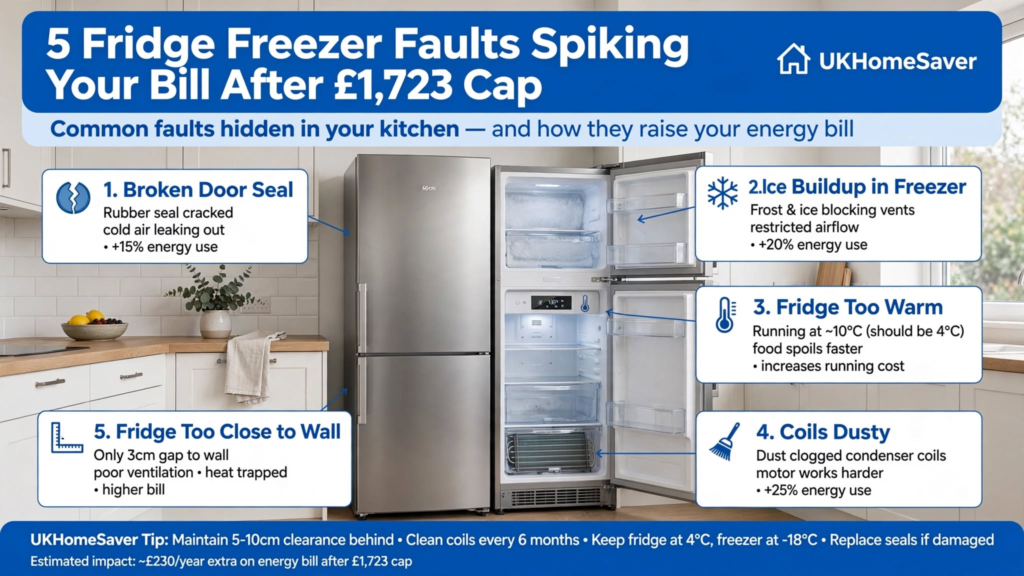
1. Broken Door Seal — +15% Energy Use
If the rubber seal is cracked, loose, or has food stuck in it, cold air leaks out. Your fridge motor runs longer to stay at 4°C.
Paper test: Close the door on a piece of paper. If you can pull it out easily, the seal is failing.
Fix: Clean seals with warm soapy water weekly. If cracked, replacement seals cost £25-£60 on eBay/Amazon and take 15 minutes to fit. Don’t wait — this is the cheapest win.
Read:Which Home Appliances Cost the Most to Run After the October 2026 Price Cap?
2. Ice Buildup in Freezer — +20% Energy Use
Frost blocks vents and stops air circulating. The freezer works harder to keep -18°C.
Fix: Defrost fully if ice is over 5mm thick. Don’t use a knife — use bowls of hot water and towels. After defrosting, check door was closing fully. Leave space between food packs for airflow.
3. Fridge Too Warm — Running at 10°C Instead of 4°C
According to the Food Standards Agency’s advice on chilling, your fridge should be 5°C or below, and ideally 0-5°C for fresh food. Many UK fridges run at 7-10°C because the dial is wrong, or because it’s too full or too close to the wall.
Warm fridge = food spoils faster + motor runs constantly.
Fix: Put a fridge thermometer (£4) in the middle shelf. Set to 3-4°C. Freezer to -18°C. Don’t put hot food straight in.
4. Dusty Condenser Coils — +25% Energy Use
The black coils at the back or underneath get clogged with dust, pet hair and fluff. Heat can’t escape, so the compressor runs longer.
This fault alone can add £30-£50 a year at the October cap.
The Energy Saving Trust recommends defrosting your freezer once or twice a year to keep it working efficiently, and ensuring air can circulate around the back of your fridge and freezer to increase efficiency.
Read:Warm Home Discount October 2026: Who Gets £150 Off Energy Bills Automatically and What to Do If You Don’t
Fix: Unplug, pull fridge out, vacuum coils gently every 6 months with brush attachment. Keep 5-10cm gap behind and on top for ventilation.
5. Fridge Too Close to Wall — Traps Heat
If there is only 2-3cm gap to the wall, hot air from coils is trapped. Same effect as dusty coils.
Fix: Measure gap today. You need 5-10cm behind, and 3-5cm above. Especially important for integrated fridges in small kitchens.
How Much Can You Save Before January?
Ofgem’s price cap is expected to rise 16% in January 2027 according to Cornwall Insight. Fixing these 5 faults now could save £70-£120 before winter ends — almost the same as the £150 Warm Home Discount.
[…] fridge freezer faults — see our guide: 5 Fridge Freezer Faults Spiking Your Bill After £1,723 […]
[…] costs, fixing appliance faults helps more than worrying about standing charges: see our guide on 5 Fridge Freezer Faults Spiking Your Bill After £1,723 Cap — a dusty coil alone can add £50 a […]